Key 2025 AHA Guidelines
- Stability assessment: Determine if unstable (immediate cardioversion) vs. stable (medical management)
- QRS width classification: Narrow (<0.12s) vs. wide (≥0.12s) guides specific treatment
- Vagal maneuvers first: For regular narrow-complex tachycardia; modified Valsalva superior to standard
- Adenosine for SVT: 6mg rapid IV push, then 12mg if needed (after vagal maneuvers fail)
- Synchronized cardioversion: Energy 50-100J for atrial flutter, 100-200J for other SVT/VT; increase stepwise if needed
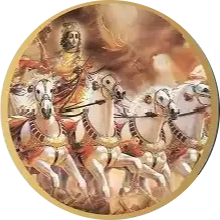
Bhagavad Gita Teaching
Verse 6.5: "Uddhared atmanatmanam natmanam avasadayet, Atmaiva hy atmano bandhur atmaiva ripur atmanah" ("Elevate yourself through your own effort; do not degrade yourself. The self is the friend of the self, and the self is the enemy of the self.")
Application: In tachycardia, the heart has become its own enemy, racing beyond its sustainable capacity. Our intervention helps the heart return to its natural rhythm—becoming its own friend again.
The Integration
This profound verse about self-regulation applies beautifully to tachycardia management. The rapid heart has become "atma ripu" (enemy to itself)—consuming oxygen faster than supply, potentially decompensating into arrest. The 2025 guidelines provide a systematic ladder of interventions: first, the gentlest approach (vagal maneuvers—the heart helping itself); then medications (external assistance); finally cardioversion (decisive external intervention). This mirrors the spiritual path: we first try self-effort, then seek guidance, then sometimes require dramatic intervention. The integration teaches that our role is to help the heart "uddhared atmanatmanam" (elevate itself through itself)—restore its natural rhythm. The modified Valsalva technique represents the "atma bandhu" (self as friend)—using the patient's own physiology to break the tachycardia. When that fails, we provide progressively more aggressive help, but always with the goal of restoration, not domination.
Read the Full Book Offline
Download the complete 18-chapter work synthesizing 2025 ACLS guidelines with Bhagavad Gita wisdom in a single convenient PDF.