Key 2025 AHA Guidelines
- Early defibrillation: First shock as soon as VF/pVT identified; critical for survival
- Single shock strategy: One shock followed immediately by CPR (rather than stacked shocks)
- Biphasic energy levels: 120-200J (device specific) for first shock; equivalent or higher for subsequent
- Minimizing pre-shock pause: Charge during CPR when possible; <5 second pause ideal
- Antiarrhythmics: Consider amiodarone 300mg or lidocaine 1-1.5mg/kg for refractory VF/pVT after first shock
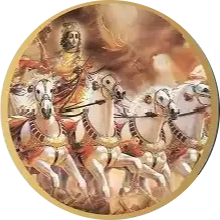
Bhagavad Gita Teaching
Verse 2.48: "Yoga-sthah kuru karmani sangam tyaktva Dhananjaya, Siddhy-asiddhyoh samo bhutva samatvam yoga uchyate" ("Perform your duty with equipoise, O Arjuna, abandoning attachment to success or failure. Such equanimity is called Yoga.")
Application: The moment of defibrillation requires complete equanimity—we shock with full commitment but without attachment to whether this particular shock succeeds.
The Integration
Defibrillation is the most dramatic intervention in resuscitation—a moment when electricity meets flesh to restart life. The 2025 guidelines emphasize technical precision: proper energy, minimal pause, immediate resumption of CPR. But success requires more than technique. The Gita teaches us to perform the action (shocking) with full dedication while remaining emotionally balanced about the outcome. This prevents two common errors: hesitating to shock (attachment to failure/fear) or celebrating prematurely after ROSC (attachment to success). The phrase "yoga-sthah kuru karmani" (established in yoga, perform action) perfectly describes the ideal state—grounded, centered, ready to deliver the shock and immediately resume compressions, regardless of rhythm response. Multiple shocks may be needed; each requires the same focused equanimity.
Read the Full Book Offline
Download the complete 18-chapter work synthesizing 2025 ACLS guidelines with Bhagavad Gita wisdom in a single convenient PDF.